The Dover Border Access Improvement Project (DBAIP) is the culmination of several years of work led by KCC alongside the Department for Transport and the Port of Dover to tackle longstanding traffic issues at the UK’s busiest international ferry port. The improvements are expected to reduce the frequency and duration of Operation Brock and Dover TAP by up to 80% during normal operations.
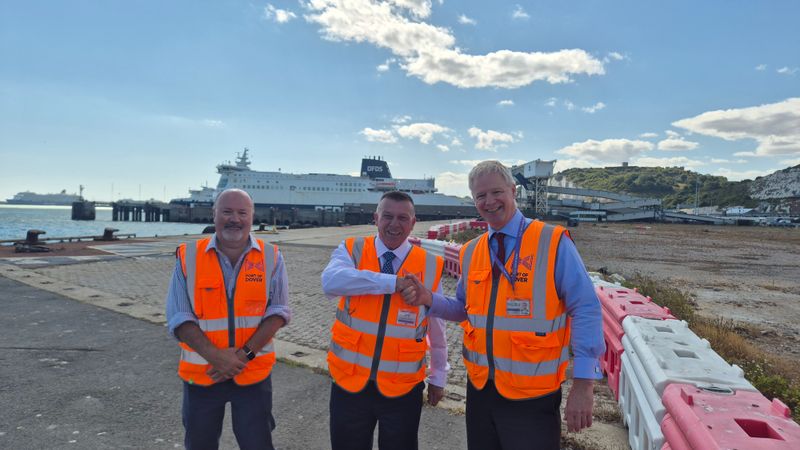
The border control facilities within the Port's eastern docks will be reconfigured to create additional space for border processing booths and increase the Port's capacity for vehicle queuing for the equivalent of more than 500 lorries. The scheme is expected to help keep traffic within the Port itself, reducing the impact on the A20, M20 and surrounding road network.
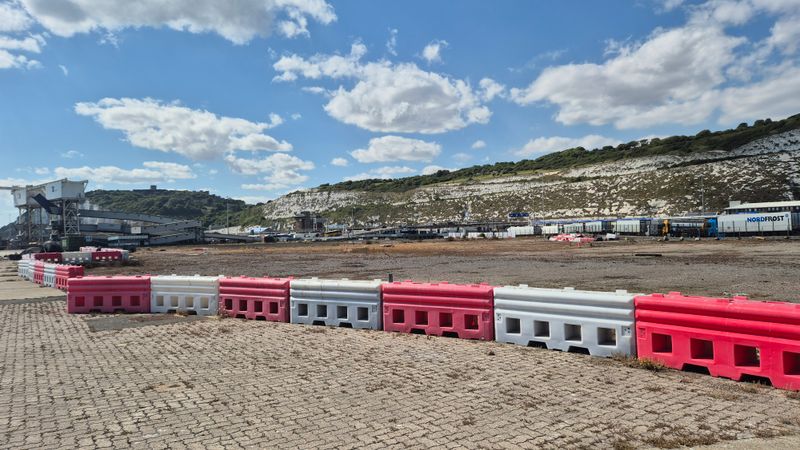
This space in the Port of Dover will be reconfigured under the plans
KCC successfully secured £20 million from the Department for Transport (DfT) through the Levelling Up Fund to enable the scheme to proceed, alongside investment from the Port of Dover. The funding follows sustained work by the Council to develop and champion a long-term solution to cross-Channel traffic disruption in the county.
KCC will not be contributing any of its own funding towards the scheme.
The scheme has been developed through a partnership led by KCC, working closely with the DfT and Dover Harbour Board to address to address the traffic pressures that have affected Dover and Kent’s wider road network for many years. The Port of Dover will now deliver the improvement works.
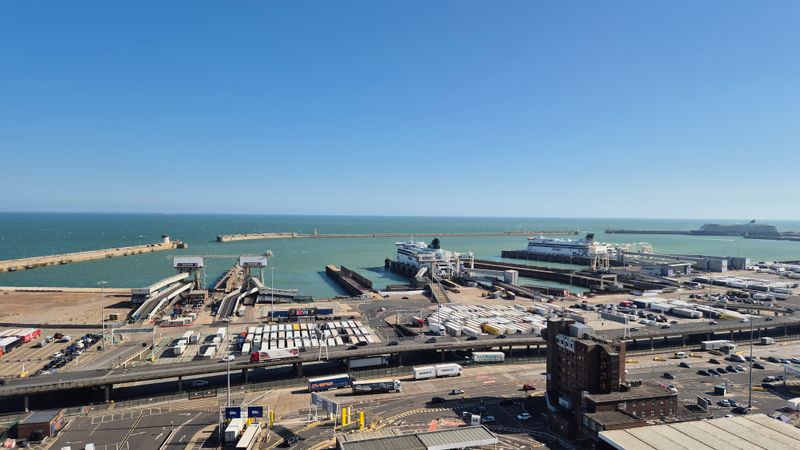
The scheme is expected to help keep traffic within the Port itself, reducing the impact on the surrounding road network.
The scheme is expected to significantly reduce the frequency and duration of Operation Brock and Dover TAP traffic management measures, by up to 80% during normal operations. While these controls will still be required in some circumstances, such as during severe weather, industrial action in France or ferry operational issues, the improvements are expected to reduce the need for emergency traffic management when demand exceeds the Port's capacity. Residents and business in Dover should benefit from less traffic congestion and delays, helping to support the local economy.
The benefits are expected to extend beyond Dover, with reduced disruption anticipated along the M20 corridor through Folkestone and as far as Maidstone. This will help to improve journey reliability for communities across a wider area of Kent and support an important international trade route to Europe.
Following the Growth, Environment and Transport Cabinet Committee meeting on Tuesday 7 July 2026, Peter Osborne, KCC’s Cabinet Member for Highways and Transport has signed the key decision to take the scheme forward.

“KCC has worked relentlessly with government and the Port of Dover to develop a lasting solution, and we successfully secured £20 million of funding to make it happen.”
Peter Osborne, KCC’s Cabinet Member for Highways and Transport said: “This project represents the beginning of the end for Operation Brock as we’ve come to know it.
“For years, Kent residents, businesses and visitors have experienced the disruption caused when traffic backs up around the Port of Dover. KCC has worked relentlessly with government and the Port of Dover to develop a lasting solution, and we successfully secured £20 million of funding to make it happen.
“By creating more space for border processing capacity and vehicle queuing within the Port, this scheme is expected to significantly cut the need for Operation Brock and Dover TAP by up to 80% during normal operations, helping keep traffic moving and supporting communities across Kent.
"It’s a significant milestone for Dover, for Kent and for the resilience of one of the UK’s most important trade routes."