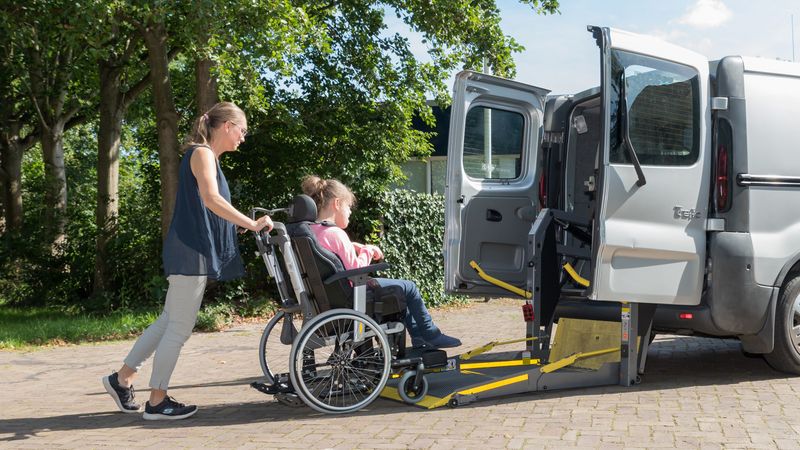
“Transporting children with SEND isn’t just about getting from A to B,” says Beverley Fordham, Cabinet Member for Education and Skills. “It’s about making sure every child arrives safely, on time and ready to learn.”
The scale of the challenge
Kent County Council (KCC) arranges transport for 7,912 pupils, with around 6,500 using hired vehicles like taxis and minibuses. At Snowfields Special School in Cranbrook alone, 133 pupils rely on this service, many travelling from the Isle of Sheppey, which can mean journeys of over an hour.
“These trips can be long and tiring for pupils,” explains Beverley. “We do everything we can to keep journey times reasonable, but some children live far from the nearest suitable school. It’s not perfect, but it’s the reality we’re working with.”
Kent transports more SEND pupils than any other local authority, and demand for specialist school places continues to grow. “Every child’s needs are different, and every route has to be planned with care,” Beverley adds. “It’s a huge team effort.”
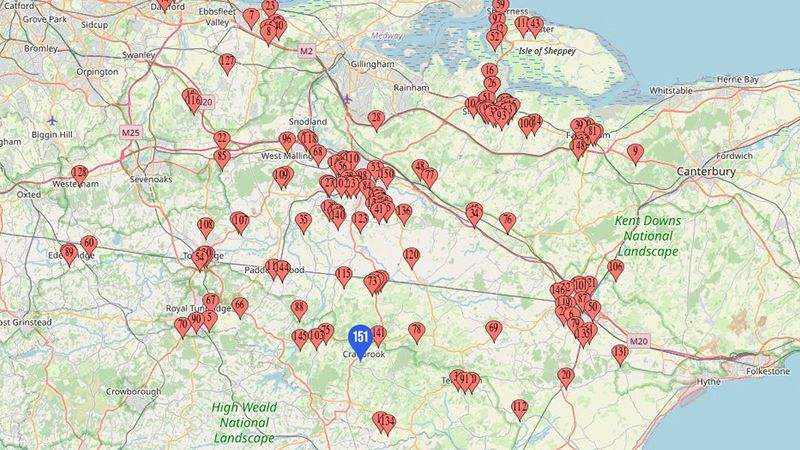
At Snowfields Special School in Cranbrook (blue pin point), there are 133 pupils that rely on home to school transport
Behind the scenes, three teams make it happen
SEND Casework Team – makes decisions about where children go to school, then shares details of a child’s needs and nearest suitable school with transport colleagues.
Transport Eligibility Team – checks if a child qualifies for council-funded transport against national criteria and manages travel training and personal transport budgets where appropriate.
Public Transport Team – arranges transport and manages contracts with operators.
This summer, our teams processed 3,300 new requests and planned transport for 114 schools, helping pupils start the year smoothly.
“An external review found 89% of parents are satisfied or very satisfied with the service, a credit to the hard work behind the scenes,” adds Beverley.
We know, however, that things don’t always go perfectly. “When issues crop up, we want families to know we’re on it,” says Beverley. “We’re automating as many tasks as we can to free up time for our teams so they can respond faster and keep things running smoothly.”
Managing costs through smarter planning
National law requires councils to provide free transport for eligible pupils, and rising demand means costs have soared. That’s why recent savings matter. This year, we expect to save £2.5 million through smarter planning – on top of a £4.7 million underspend last year.
“These savings come from better planning, not cutting services,” Beverley explains. “Families can be confident that children who qualify for transport will still get the support they need.”
One major change is QRoutes, a specialist planning tool that helps us:
- Reduce the number of vehicles hired by making better use of empty seats.
- Plan routes faster and more accurately.
- Spot inefficiencies and fix them quickly.
- Layer in data like bus stop locations for flexibility.
“QRoutes is a game-changer,” says Beverley. “It keeps costs down without compromising on safety or quality – and that’s good for families and taxpayers.”
“This year, we expect to save £2.5 million through smarter planning – on top of a £4.7 million underspend last year.”
More improvements
Clear and timely communication is just as important as the transport itself.
“We’ve created a new guide for parents and we’re creating animations to explain the process step-by-step,” notes Beverley. “These resources show what you can expect from us, what we ask of parents and carers, and what our transport operators are responsible for.”
The guide complements the Travel Passport, which helps families share important information with the driver – medical needs, communication preferences, and strategies that help their child feel comfortable.
“We’re also bringing back travel training because independence matters – it gives young people confidence and opens up opportunities.”
Future plans
Transport is only part of the solution. We’re also investing in more special school places and specialist resource provisions (SRP) closer to where children live. We’ve recently announced new SRP places and on 12 December, the government announced funding which could be used in Kent to create two new special schools in Whitstable and Swanley, and an alternative provision school in Northfleet.
“The more local places we have, the less children need to travel and the more time they can spend with their families or taking part in after-school activities with their friends,” adds Beverley.
Families of school-age children also have another option: Personal Transport Budgets (PTBs). Instead of using hired transport, parents can receive a budget to arrange travel themselves - offering flexibility to choose what works best, whether that’s driving their child, sharing lifts, or arranging alternative transport.
“PTBs give parents more control,” Beverley explains. “For some families, it means shorter journeys, more independence, and the ability to fit transport around their child’s needs and family life.”
“Home-to-school transport for children with SEND is one of the most vital - and challenging – services we deliver. The distances, the individual needs, and the sheer scale of demand mean there are no quick fixes. But we’re making real progress through smarter planning, better information for families, new technology like QRoutes, and creating more local school places.
“This service matters deeply to families, and every decision we make is guided by two priorities: keeping children safe and supported while using public money wisely. There’s still more to do, but with innovation and collaboration, we’re building a system that works better for everyone.”