It's an understandable frustration. Looking after roads before they deteriorate is often the most effective and value for money. However, with limited funding available, we have to balance preventative maintenance with repairing roads that already need more significant work.
That's why, wherever possible, we're investing in treatments that help protect roads before serious problems develop.
Just as regular servicing helps keep a car running smoothly and can prevent more costly repairs later, maintaining roads at the right time can help extend their life, improve grip and reduce the likelihood of potholes forming.
Over the spring and summer, we've treated more than 446,000 square metres of road surface across Kent – roughly the same area as 62 football pitches. The work was carried out at 91 locations across the county, helping to protect roads and keep them in better condition for longer.
The programme included:
- 340,377 square metres of surface dressing
- 105,863 square metres of microsurfacing
- 446,240 square metres treated in total
- 91 roads treated across Kent
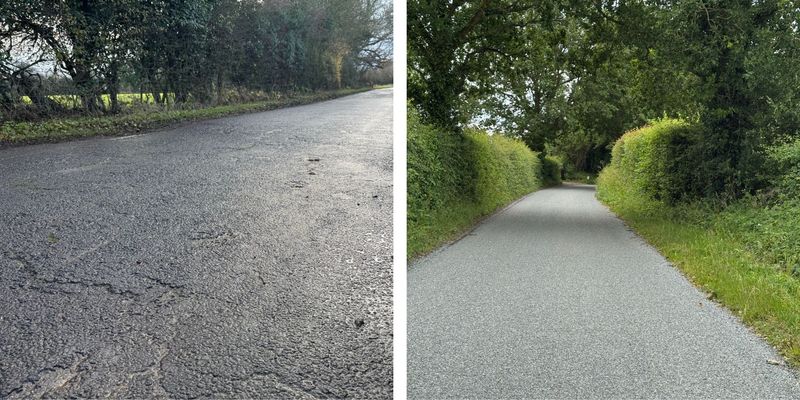
Protecting roads and making every pound count
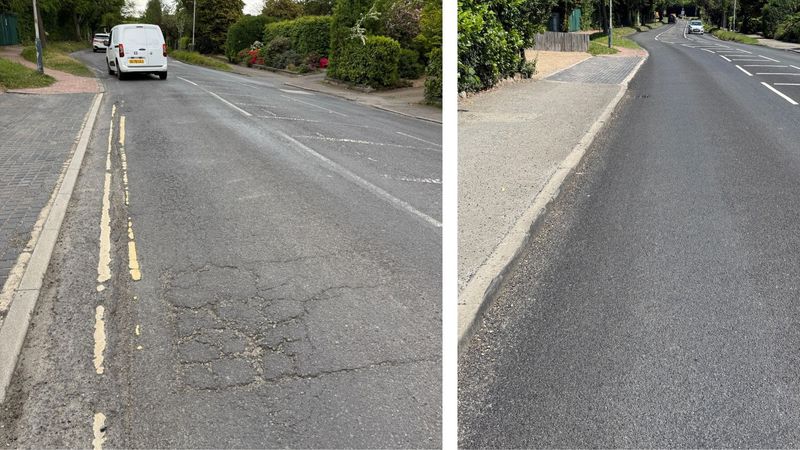
Surface dressing and microsurfacing are used on roads that remain structurally sound but are beginning to show signs of wear. These treatments help seal and protect the road surface, improve grip and slow down deterioration.
By intervening early, we can often delay the need for more extensive and disruptive repairs in the future.

“Treatments like surface dressing and microsurfacing cost much less than full resurfacing and can be completed more quickly, which means we can protect more roads,”
Peter Osborne, KCC Cabinet Member for Highways and Transport, said: "Residents often tell us they want to see roads repaired before they deteriorate, and they're right. It's better to protect a road while it's still in reasonable condition than wait until it needs major repairs."
"The challenge is that there simply isn't enough funding available to carry out preventative maintenance on every road that would benefit from it. If resources allowed, we'd do more of this type of work because it's often the best value approach."
"Treatments like surface dressing and microsurfacing cost much less than full resurfacing and can be completed more quickly, which means we can protect more roads, make the most of taxpayers' money and help reduce the need for bigger repairs further down the line."
What's the difference between surface dressing, microsurfacing and resurfacing?
We often receive questions about why some roads are surface dressed or microsurfaced rather than fully resurfaced.
The answer is that they do different jobs.
Resurfacing is used when a road has deteriorated to the point where the existing surface needs replacing.
Surface dressing and microsurfacing are preventative treatments used much earlier in a road's life. Their purpose is to protect the existing surface, extend its lifespan and delay the need for major repairs.
By combining preventative maintenance with resurfacing where it's needed most, we're taking a balanced approach to looking after Kent's roads and making the best use of the funding available.