The move supports a new government immunisation campaign aimed at boosting childhood vaccination in the wake of falling national rates.
It also follows the UK losing its measles-free status from the World Health Organisation (WHO) as protection declined and cases surged.
From 2021 to 2023, the UK was considered to have "eliminated" measles. But in January global health officials said the disease was re-established in the country. A serious outbreak is ongoing in north London.
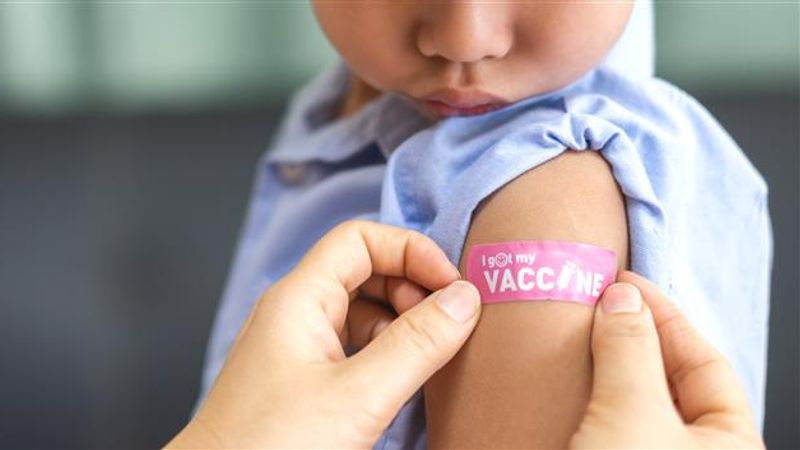
The ‘Stay Strong, Get Vaccinated’ campaign urges parents and carers to make sure their children are up to date with routine vaccinations – which now includes the newly-introduced MMRV vaccine, protecting children against measles, mumps, rubella and chickenpox in a single jab. The vaccine is given to children at 12 months and 18 months. Some older children are also offered it.
Check your child is up to date with their routine vaccinations and catch them up by:
- checking your child’s Red Book
- contacting your GP practice - if there are gaps, or you can’t find the Red Book, to arrange for catch up vaccinations. Alternatively,
- if your child is home educated, or has missed a vaccination in school, you can also attend one of the Kent Community Health NHS Foundation Trust’s (KCHFT) community clinics - to book an appointment, or for more information, please contact the KCHFT team on 0300 123 5205 or email kchft.cyp-immunisationteam@nhs.net
Routine childhood vaccinations on the NHS are free, safe, and highly effective at providing protection against a wide range of serious diseases including whooping cough, meningitis, polio, and diphtheria, as well as measles.
Many vaccines also help reduce the spread of diseases, helping to protect babies and vulnerable individuals who cannot be vaccinated. According to UK Health Security Agency (UKHSA) estimates, vaccinations prevent around 5,000 deaths and over 228,000 hospital admissions each year in England.

“There’s a lot of myths on social media about vaccinations so it’s important to get trusted advice from the NHS”
Professor Dr Anjan Ghosh, Kent County Council’s Director of Public Health, said: “Despite the benefits, latest available NHS data shows 84.3% of five-year-olds in Kent had received both doses of the measles, mumps and rubella vaccine.
“While this is above the national average, it’s still well below the 95% target the World Health Organisation say is necessary to protect communities from outbreaks.
“Measles, for example, spreads extremely easily among unvaccinated children, as we’re seeing in the ongoing outbreak in London. It is preventable - but without vaccination children remain vulnerable to severe complications, such as pneumonia and brain inflammation. In rare cases, measles can be fatal.
“For all these reasons, I urge parents and carers not to take any risks – and if you have questions or concerns, please speak to your GP or visit www.GetVaccinatedNow.co.uk. There’s a lot of myths on social media about vaccinations so it’s important to get trusted advice from the NHS.”
“Measles is so contagious that one infected person can spread it to up to 18 others. By getting vaccinated, we not only protect ourselves from illness, but we also shield those in our families and communities who cannot be immunised”
Professor Dr David Whiting, Medway Council’s Director of Public Health, said: “Vaccination is one of the cornerstones of modern medicine - the MMR vaccine alone is estimated to prevent a million deaths annually worldwide.
"However, in Medway last year just 81.5% of children had received both doses of the measles, mumps and rubella vaccine by the age of five. This puts us at risk of outbreaks.
"Measles is so contagious that one infected person can spread it to up to 18 others. By getting vaccinated, we not only protect ourselves from illness, but we also shield those in our families and communities who cannot be immunised.
"Given the situation in London, it's more important than ever to check your family's health records and catch up on any missed vaccines as soon as possible.”