The small copper-alloy object, found by metal detectorist Stephen Newbury, dates to the late sixth or early seventh century. Experts believe it was used to create decorative metal foils for high-status military equipment, such as helmets.
The browser you are using is not supported or you do not have JavaScript enabled. Update your browser or enable JavaScript to view this video.
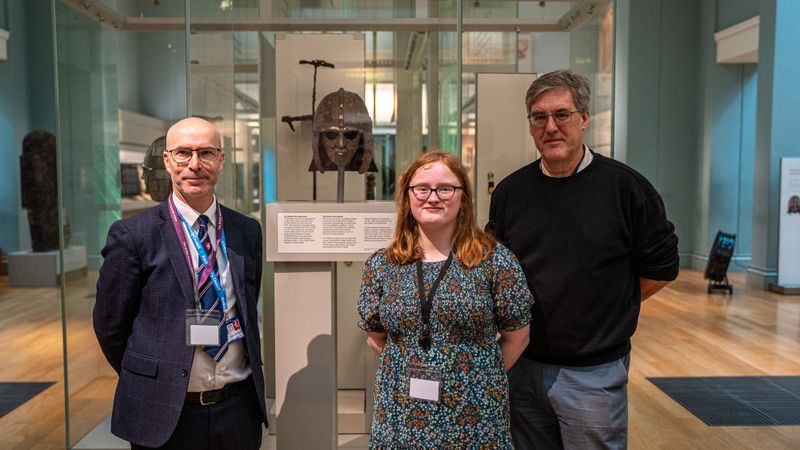
Analysis by Kent County Council and the British Museum shows the die is closely comparable in size and design to panels on the famous Sutton Hoo helmet. Crucially, it is the only confirmed example of its kind found in Britain.
This suggests that helmets previously thought to be imported from Scandinavia may have been made in England.
The discovery has now been officially declared Treasure by a coroner due to it being an object of significant historical interest.
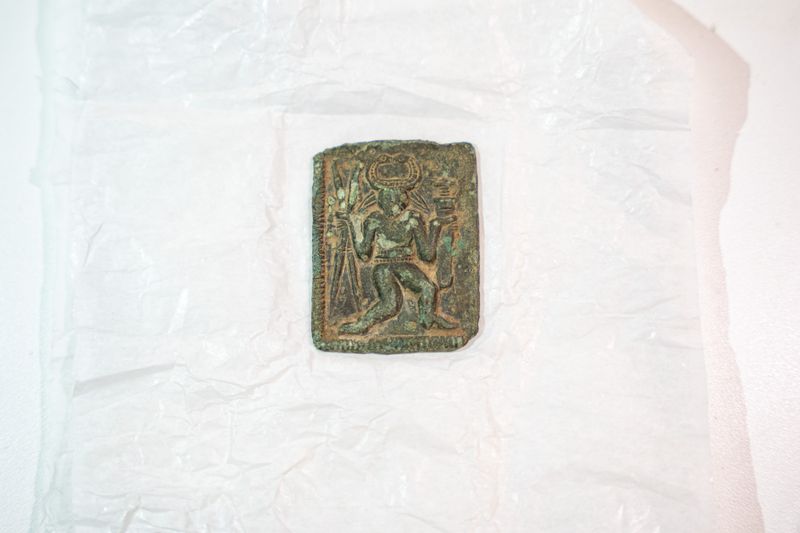
The small copper-alloy object, found by metal detectorist Stephen Newbury, is the only confirmed example of its kind found in Britain.

“This is an exciting discovery for Kent, strengthening our reputation as a county with a rich and internationally significant heritage.”
Jamie Henderson, Cabinet Member for Environment, Coastal Regeneration and Public Health, said: “This is an exciting discovery for Kent, strengthening our reputation as a county with a rich and internationally significant heritage. Residents can feel incredibly proud that a discovery of this importance has been found right here in Kent.
‘Our county has played a vital role throughout history, and this is another piece of evidence showing Kent’s importance in the story of early England, as a place of craftsmanship, culture and international connections.
‘Finds like this help tell the story of our past, connect people with the remarkable heritage on their doorstep, and show why it is so important that we continue to protect and celebrate our historic environment.”
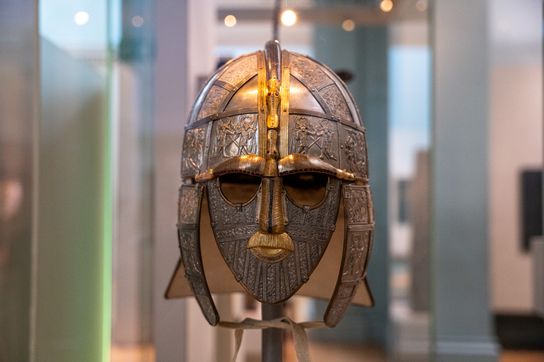
Experts believe it was used to create decorative metal foils for high-status military equipment, such as helmets.
Dr Andrew Richardson, Finds Liaison Officer for Kent County Council and Kent Officer for the Portable Antiquities Scheme, said: “This small but remarkable find provides important evidence that helmets like the Sutton Hoo example could have been made in Kent, highlighting the skill and connections of early medieval craftworkers in the county.”
Ian Richardson, Acting Head of Portable Antiquities and Treasure at The British Museum, said: “We’re grateful to the finder for sharing this fantastic discovery with the Portable Antiquities Scheme for recording, which allowed Dr Andrew Richardson to recognise its significance and ensure it was reported under the Treasure Act. This will enable it to be acquired by a museum and preserved in public ownership for the benefit of everyone.”
It is hoped the object will be acquired and displayed locally at the Beaney House of Art and Knowledge in Canterbury.
The die stamp is recorded in the Portable Antiquities Scheme database: Record ID: KENT-23D64B - EARLY MEDIEVAL die stamp
Notes to editors
The Treasure Act 1996
Under the Treasure Act, finders have a legal obligation to report all finds of potential Treasure to the local coroner in the district in which the find was made. The success of the Act is only possible through the work of the Portable Antiquities Scheme, advising finders of their legal obligations, providing advice on the process and writing reports for coroners on Treasure finds.
The Act allows a national or local museum to acquire Treasure finds for public benefit. If this happens a reward is paid, which is (normally) shared equally between the finder and landowner. Interested parties may wish to waive their right to a reward, enabling museums to acquire finds at reduced or no cost. Rewards are fixed at the full market value of the finds, determined by the Secretary of State upon the advice of an independent panel of experts, known as the Treasure Valuation Committee.
The administration of the Treasure process is undertaken at the British Museum. This work involves the preparation of Treasure cases for coroners' inquests, providing the secretariat for the Treasure Valuation Committee, and handling disclaimed cases and the payment of rewards.
The Portable Antiquities Scheme (PAS)
Managed by the British Museum in England, and Amgueddfa Cymru – Museums Wales in Wales, the PAS is a partnership project, working with at least 117 national and local partners to deliver the Scheme's aims. It is funded (in England) through the Department for Culture, Media and Sport's grant-in-aid to the British Museum with local partner contributions. All the Finds Advisors, Finds Liaison Officers and Finds Liaison Assistants (in England) working for the PAS are employed locally but work as a national team directed by the British Museum.
Thousands of archaeological objects are discovered every year, many by members of the public, most by people while metal-detecting. If recorded, these finds have great potential to transform archaeological knowledge, helping archaeologists understand when, where and how people lived in the past. The PAS offers the only proactive mechanism for recording such finds, which are made publicly available on its online database.
The PAS has also benefitted from internships funded by the Headley Trust, providing opportunities for people to develop a career in archaeology. Also, the Graham and Joanna Barker Fund, which has enabled extra support for the PAS in areas where resources are low. The PAS welcomes anyone interested in supporting its work locally to contact the British Museum.
Many organisations have also supported the acquisition of Treasure finds, including Art Fund, the Headley Trust, the Heritage Lottery Fund, the National Heritage Memorial Fund and the V&A Purchase Grant Fund. Without these, as well as public donations, many important archaeological finds would not be in public collections.